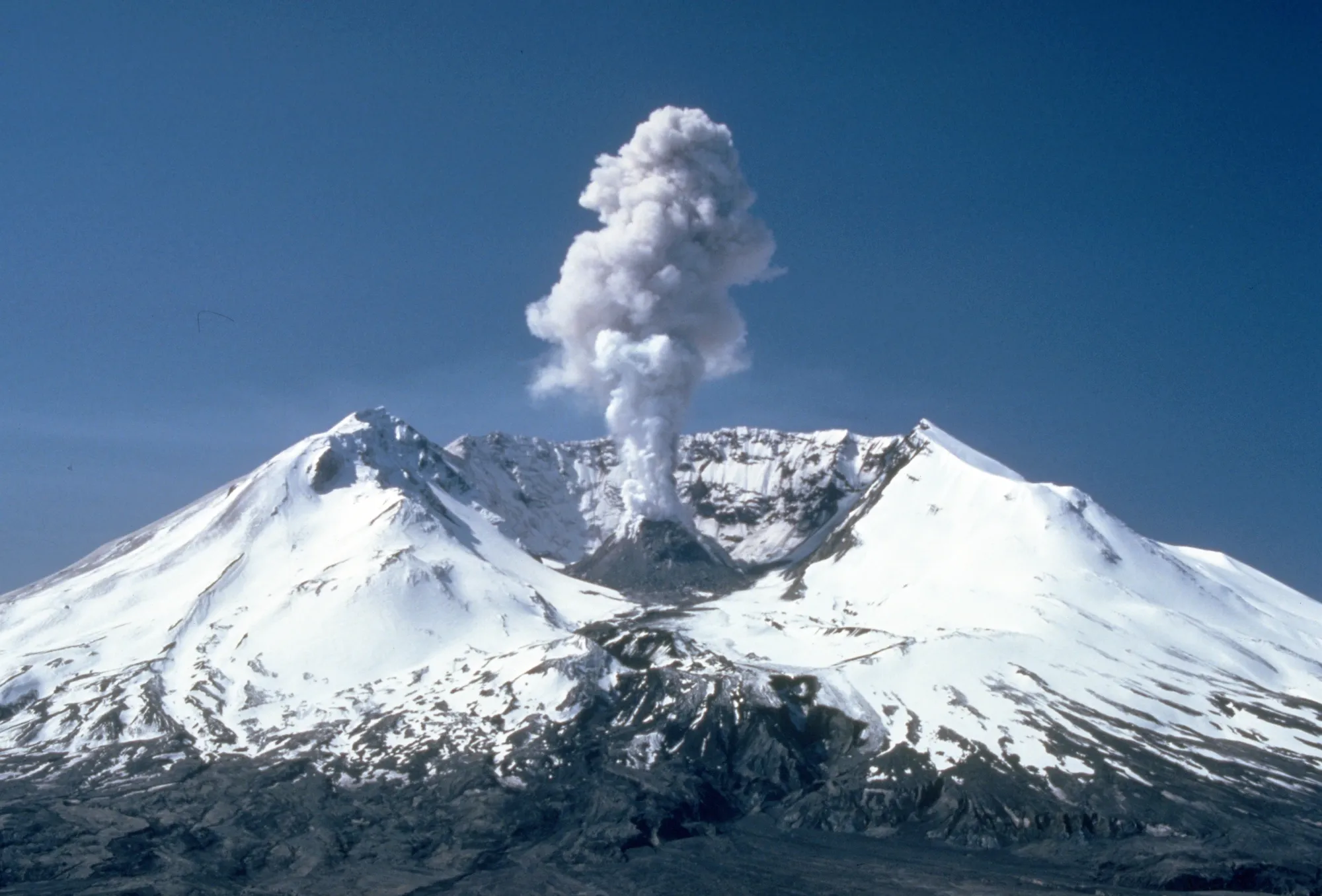
The short version
An eruption is gas trying to leave.
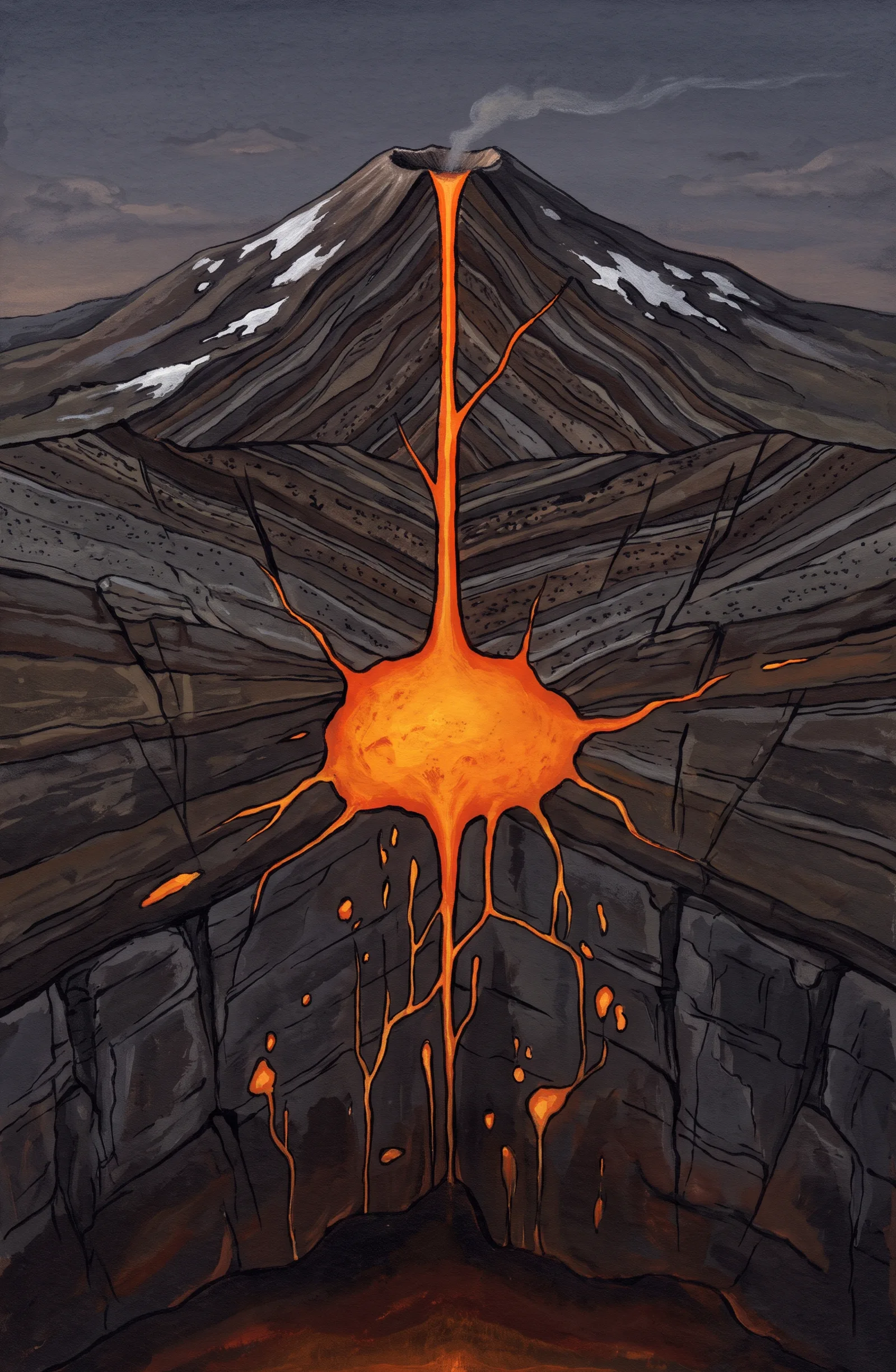
A volcano is a vent that connects to reservoirs of molten rock below the surface. The story starts many tens of miles down, where rock melts into magma. Molten rock is lighter than the solid rock around it, so buoyancy and gas pressure drive it upward. Some of it collects in reservoirs a few miles beneath the surface. Mounting pressure there can push the magma on through weak zones in the crust until it erupts as lava.
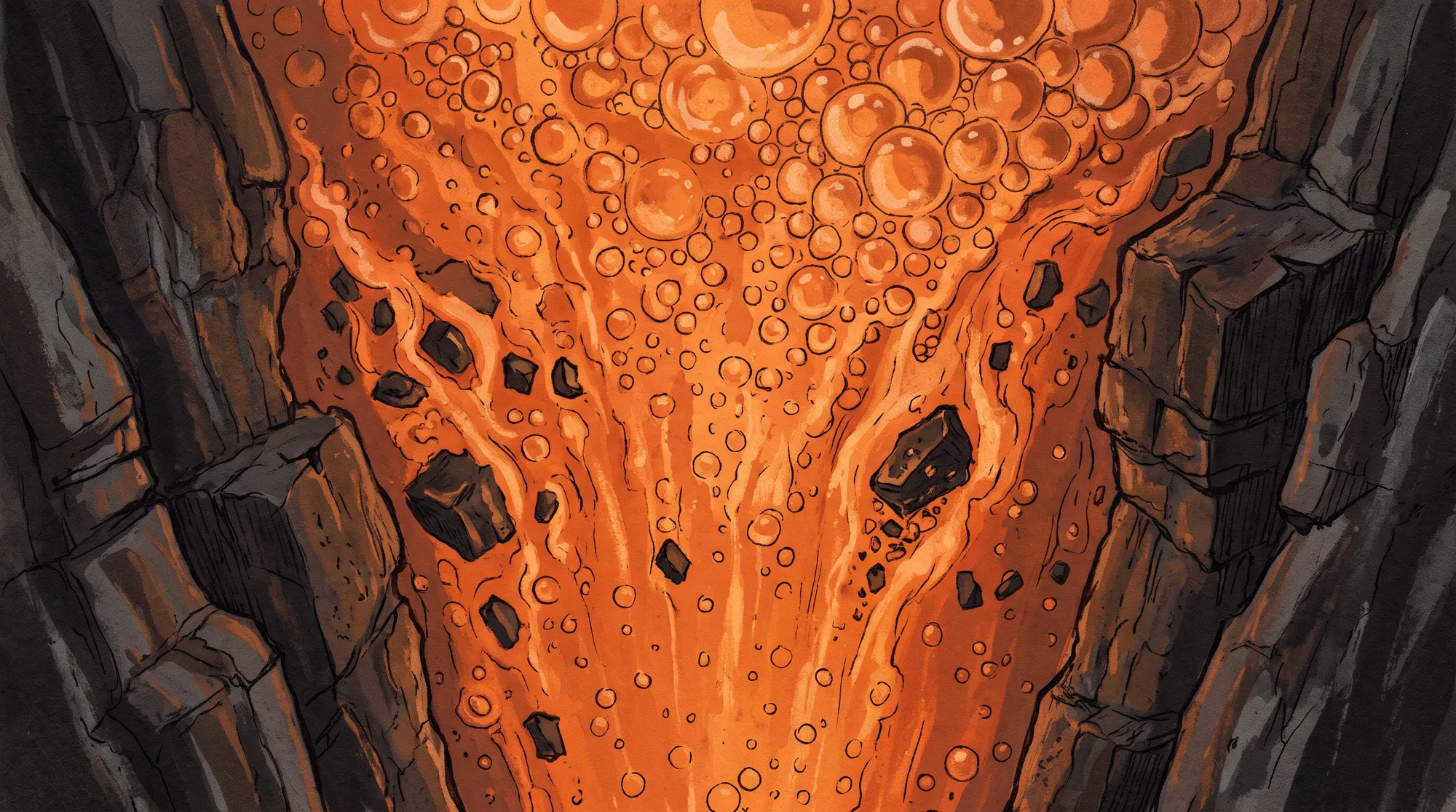
Every magma carries dissolved gas. While the magma is deep, the weight of rock above keeps that gas dissolved. As the magma rises, that confining pressure drops and the gas is liberated, either quietly or explosively. Which one you get depends mostly on how easily the gas can escape from the liquid, and that depends on how runny the magma is.
Two ways out
Why some pour and some explode.
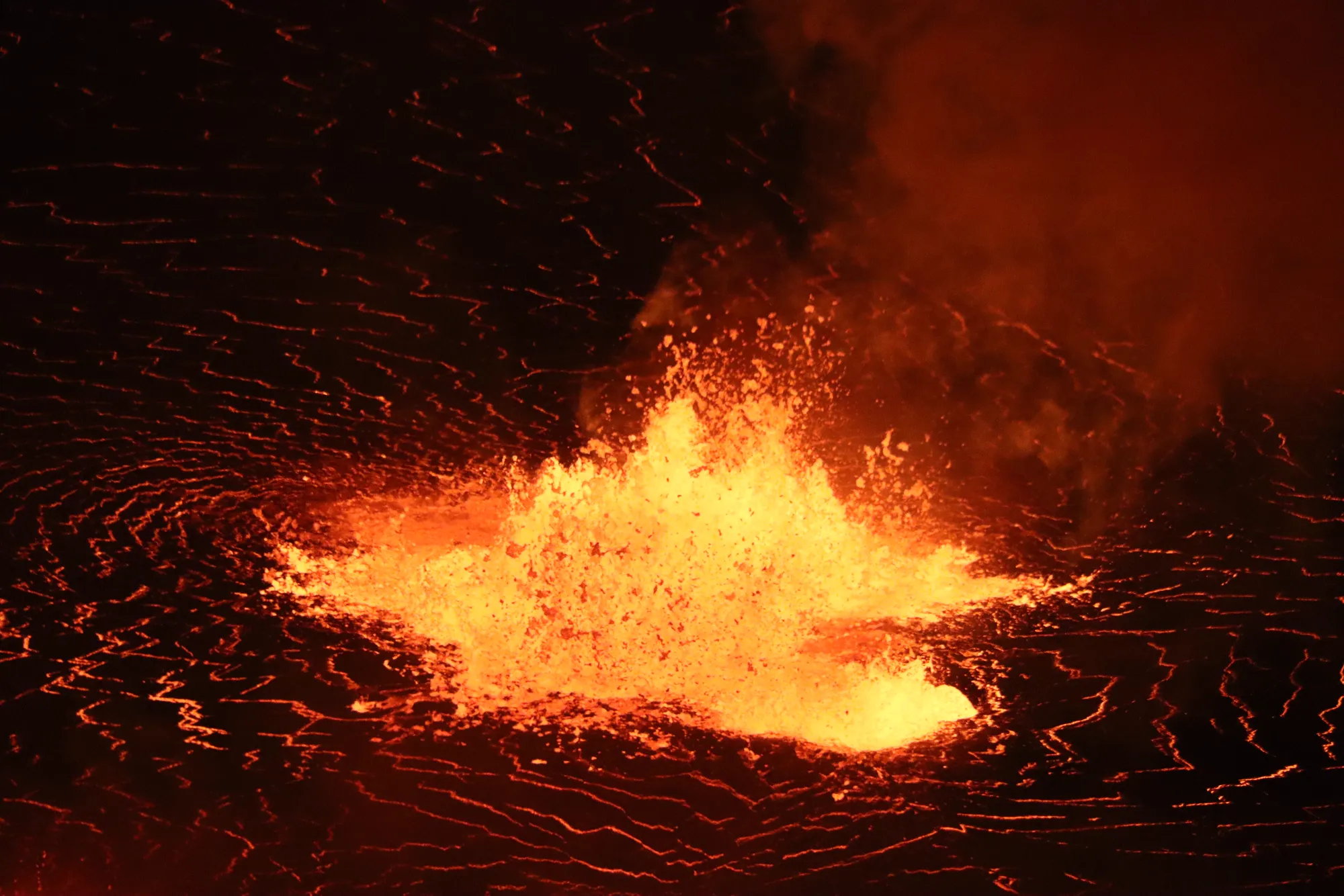
Thin and hot: it pours
Very hot, gas-rich lava with abundant iron and magnesium is fluid and flows like hot tar. Gas escapes easily, so eruptions fountain and feed lava flows. Thousands of such flows build the broad shield volcanoes of Hawaii, including Kīlauea and Mauna Loa.
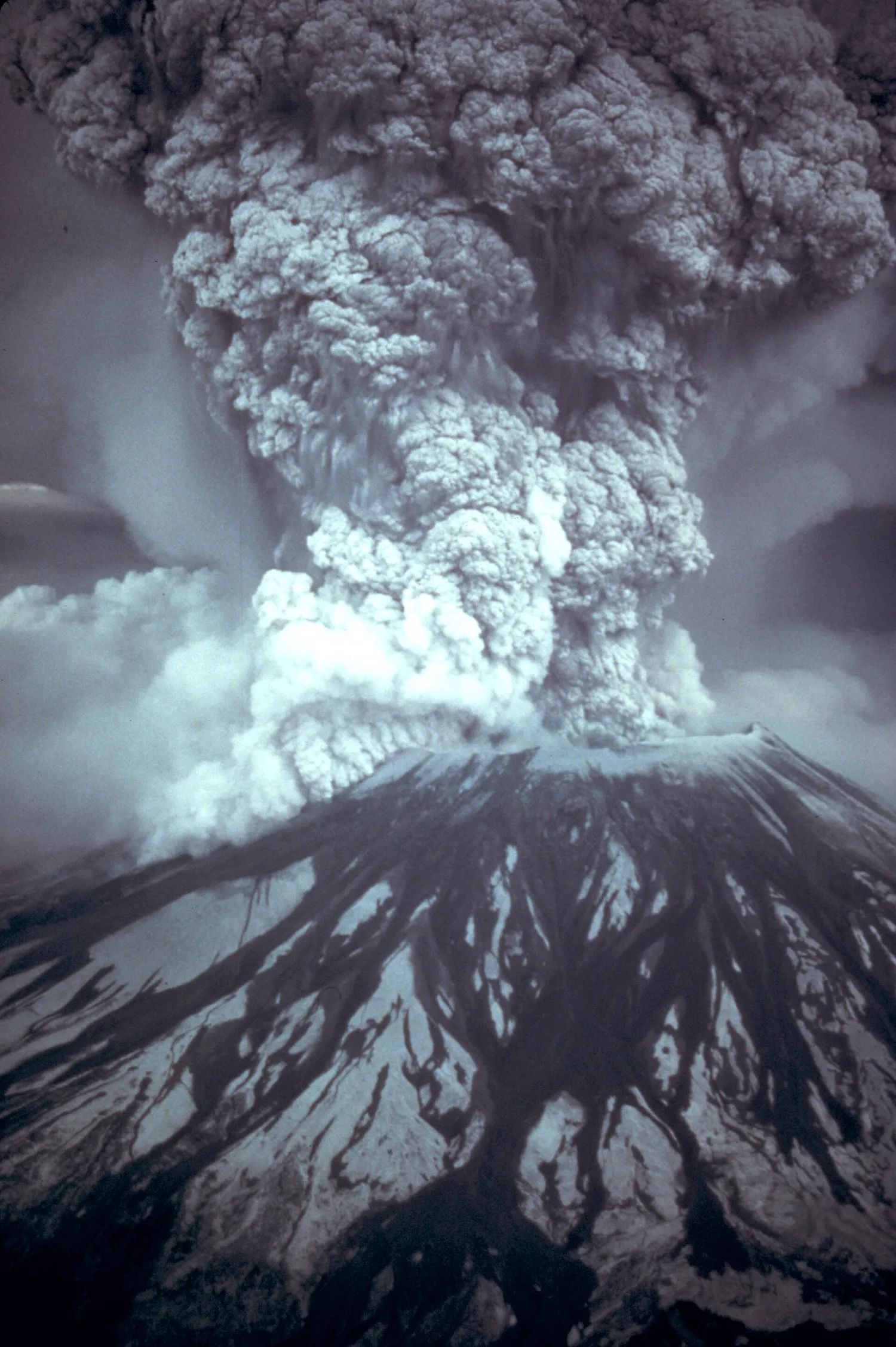
Thick and pasty: it explodes
Cooler lava high in silicon flows sluggishly, like thick honey or a pasty mass. Gas cannot move freely through it, builds up tremendous pressure, and escapes with explosive violence. That violent separation of gas from lava can produce pumice: rock froth.
Questions people ask
Before you go.
- What is the difference between magma and lava?
- The same molten rock, in two places. Underground it is magma. Once it erupts at the surface it is called lava.
- How many volcanoes are active?
- The USGS publication this story draws on counts more than 500 volcanoes that have erupted at least once within recorded history, with many more hidden under the sea. More than half of them circle the Pacific Ocean as the "Ring of Fire".
- How fast is a glowing avalanche?
- When hot ash, gas and lava fragments fall back and rush downslope, the avalanche can move at velocities as great as 100 miles per hour.
- How big can a volcano get?
- Mauna Loa, the largest shield volcano, rises 13,677 feet above sea level, and its top stands over 28,000 feet above the deep ocean floor.
- Are the pictures real?
- Every picture above ground is a real photograph by the U.S. Geological Survey, and the opening 3D mountain is real elevation data of Mayon Volcano. Its eruption is simulated. The two views inside the Earth are AI-generated illustrations and are labelled where they appear. The rumble is synthesised in your browser.
- Where do the facts come from?
- From Volcanoes by Robert I. Tilling, a U.S. Geological Survey general interest publication, and from the USGS captions of the photographs. Distances are given in miles, as the source gives them.
Sources and credits
Go deeper with the people who watch them.
The facts in this story come from one primary source, written by a volcanologist for general readers. It is free to read.
Read "Volcanoes" at USGSPictures, in order of appearance
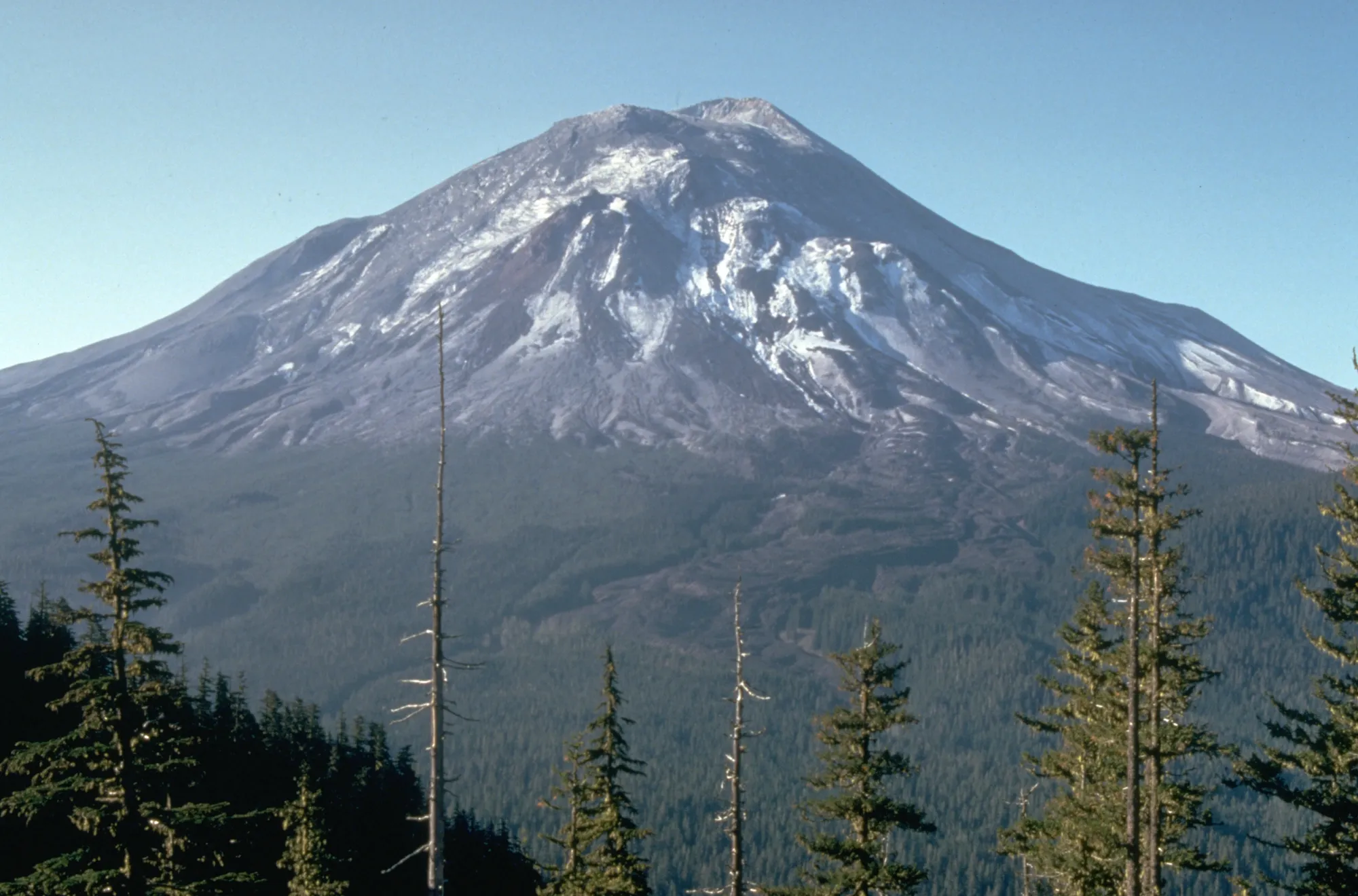
- Mount St. Helens one day before the eruption, 17 May 1980. Harry Glicken, USGS. Public domain. Source
- Opening 3D model: Mayon Volcano, Philippines, built from SRTM elevation data, true vertical scale. SRTM terrain data courtesy of the U.S. Geological Survey. The eruption on it is a simulation. Source
- Volcano cross-section. Illustration generated with Google Nano Banana 2 for this page. Not an observation.
- Gas bubbles in magma. Illustration generated with Google Nano Banana 2 for this page. Not an observation.
- Lava fountain, Kīlauea summit eruption, 29 September 2021. USGS Hawaiian Volcano Observatory. Public domain. Source
- Eruption of Mount St. Helens, 18 May 1980. Austin Post, USGS. Public domain. Source
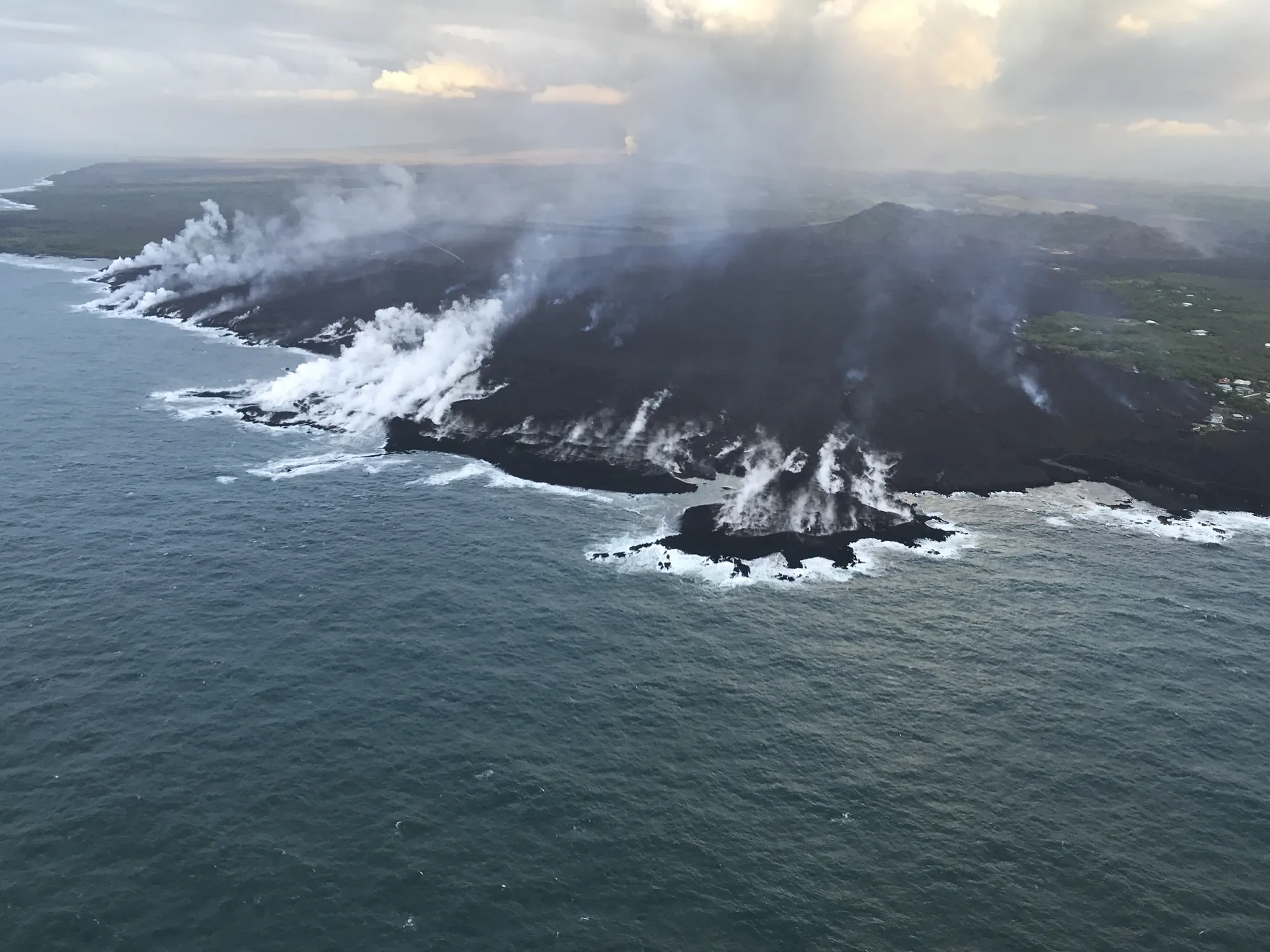
- Aerial view of the Kapoho ocean entry and lava delta, Hawaii, 9 June 2018. USGS. Public domain. Source
- Plume of steam, gas and ash at Mount St. Helens, seen from Harry's Ridge, May 1982. Lyn Topinka, USGS. Public domain. Source

